by Mark Bailey | Apr 12, 2014 | GardenLife Magazine
There are so many good uses for a timber garde building (such as a log cabin, garden room or summerhouse); they can be used as a home office, studio, spare room or gym to name a few. But to maximise the pleasure or utility you need to consider where to position a timber garden building. You should think about:
- what time of day you’ll use it
- whether it will affect the sun/shade in the rest of your garden
- how close to your property boundaries to put it
Good decisions over the siting of a garden building or summerhouse can extend its life; make the difference between needing planning permission and not needing it; and improving warmth in winter.
Once you have worked out a good spot for your log cabin or summerhouse, different building designs can increase the pleasure and usage you get from it. For example, GardenLife has timber garden buildings specifically designed for corner plots, and hexagonal and octagonal designs that offer views on all sides.
Summerhouses for sun-seekers
If you plan to entertain in a summerhouse, it’s good to have a view of the morning sun or a glorious sunset. If you’ll mainly use the building in the morning, have the main windows facing east. If you want to sip cocktails at sundown, position your summerhouse so you can see the setting sun without having to step outside or crick your neck.
For all-day views and sunlight, octagonal and hexagonal designs such as Ribble, Tweed, Bann, Hareford and Clyde are a great solution. Having walls and doors south-facing lets in sunshine in winter, helping you keep warm. Roof overhangs are useful if you want the warmth of the sun’s low rays in winter, without too much direct sunlight in summer.
Garden buildings for home-workers and artists
If you plan to work, paint or craft in your garden building, you probably don’t want direct sunlight streaming straight onto your desk or easel. So think about how you could position the cabin – and the layout of furniture – to avoid glare, whilst still admitting plenty of natural light. To make this easier, many GardenLife’s timber buildings let you choose which side you position a window or door. So if the picture on our website shows a window on the left side, it may be possible to construct the building with the window on the right side – just check the details for individual cabin descriptions, or call us to ask.
How will a timber building affect by garden?
If a new garden building takes up too much space, or throws the patio or flowerbeds into shade, it may prove a mixed blessing. The solution may be a smaller summerhouse, or a garden building with a lower roof. GardenLife has a wide selection of cabins measuring less 2.5m high or less, and that leads us nicely onto the next point.
Do I need planning permission for a garden building?
Another reason to look at sub-2.5m-high garden buildings is the issue of planning permission. The basic rules of planning permission are that, you generally need to seek planning permission for cabins:
- in your front garden, or
- with an overall roof height of over 2.5m, which are positioned within 2m of your boundary
- with eaves of over 2.5m high, or an apex roof of over 4m, or any other roof of over 3m
So, briefly, if you position a garden building at least 2m away from your garden wall (in the back garden), you are less likely to need planning permission. If you do want to position it closer to your boundary, having a timber garden building that’s 2.5m high or less could save on the paperwork (please note, however, that there are exceptions to these rules in some areas, so you should always check on your local council website).
Garden buildings and dealing with the weather
In the damp British climate, garden buildings have a great deal of rain flung at them. Which means the wood needs to dry out. The usual advice is to have around 1m of space around the building, to allow adequate ventilation. This space will also make construction, maintenance and staining easier (and we’ll be posting an article on wood preservers, stains and paints for garden buildings next week).
Trees and shrubs make useful windbreaks and can form an attractive frame or backdrop for a timber garden building of any style. However, having them too close can impede ventilation and make the building too shady (not ideal for something like a summerhouse). Remember, too, that shrubs grow! This year’s 1m-tall plant will expand upwards and outwards over the years, so think ahead when planting and planning.
A few more things to consider
Apologies for such a long list of dos and don’ts, but there are a few final things that GardenLife think are important when it comes to where to position a timber garden building. If you plan to install electricity in your garden building, check with a qualified electrician whether there are any limitations on where you position the building.
- If will expect to use your timber building daily (eg as an office), think about how you will get to it. Walking the same route across your lawn every day will quickly wear a path in the grass (which may also turn to mud in a wet autumn or winter) so you may want to lay a path.
- If your plans for a summerhouse involve relaxing with book and drink, with windows and doors thrown open, then best not to position it just over the fence from your neighbour’s climbing frame or playhouse.
- And finally, whichever type of building you choose, it needs to be constructed on land that is even, flat and well-drained. If you’re not sure about what type of base you need for a GardenLife cabin, we’re happy to advise.

by Mark Bailey | Mar 11, 2014 | GardenLife Magazine
Spending time in the garden is a way to get happier, according to a survey by Gardeners World magazine. 80% of gardeners say they feel satisfied with their lives compared with 67% of non-gardeners. And 90% of gardening fans say it improves their mood.
If your garden was beset by gales and floods this winter, spending time there may not have seemed a recipe for cheering yourself up. But the arrival of spring is a good time to make your garden more inviting. And you certainly don’t have to wait until the summer weather.
1. A few of the jobs the RHS recommends for March are: starting a vegetable patch with some shallots and early potatoes; planting summer-flowering bulbs; the first weeding of the year; and top dress containers with compost. Come April and you can start to plant hardy annuals and herbs; feed shrubs and rose; sow new lawns and repair thin patches. It will all help your garden look great this summer.
2. Introduce things to do or watch. Zen-style gardens with gravel and a few artfully placed rocks are low maintenance, but they don’t make you want to spend time there. Having things to do can make your garden more enticing – from an outdoor table tennis table to a basketball hoop. And so can things to look at: anything from a fountain, to nesting boxes, butterflies (via some butterfly-friendly plants, such as buddleia), or a pond.
3. Think of the garden as a cheaper alternative to gym membership – even during cold weather. Raking and bagging leaves can use 350-450 calories an hour, weeding and planting 200-400 calories an hour, and mowing the lawn 250-350 calories an hour. All that bending, pushing and lifting is great resistance training and good for suppleness (just be careful not to strain your bag when lifting garden containers etc). 35% of people say they don’t do gardening jobs during winter, according to the Royal Horticultural Society; maybe they should do.
4. Install some seating. A rug on the grass is fine for an impromptu picnic but what about something more comfortable?A table or bench (and some water resistant cushions for the days when it’s damp). Or a covered seating area? If you plan your garden as somewhere to entertain friends – whether it’s a cup of tea or Sunday lunch – you’re more likely to use it.
5. Add more colour. Wooden benches, bare flower beds, dark-coloured decking – they all look rather subdued in winter and early spring. So create some of your own colour – revive old garden furniture with bold colours,use patterned cushions or rugs, paint a garden shed with retro candy colours, put coloured containers on a patio, and so on. Basically be bold – if you tire of the colours, you can use another colour scheme next year.
 6. In an unreliable climate, being outside is not always an option. It’s too windy, too hot, too wet or there are too many wasps. But garden living doesn’t have to involve being outside. A garden gazebo could shelter your spring or summer barbecues from the rain, or make a great cover for a garden hot-tub. A timber summerhouse could let you enjoy drinks in the garden for three seasons of the year, not just on a few glorious summer evenings.
A playhouse or garden den could get your kids out in the garden in all weathers, and away from TVs and tablets. A garden studio could let you paint or craft in the warm and dry, using the outside to inspire you. And if you like to do a bit of outdoor cooking but get fed up with the rain, try our new year-round Kim barbecue hut – you can even barbecue in the snow!
With some of these suggestions, a little bit of elbow grease and a touch of creativity, you can make your garden more inviting in 2014.
by Mark Bailey | Mar 4, 2014 | GardenLife Magazine
If you plan to work in a summerhouse, or enjoy it in winter, you need to think about warmth – ideally before buying anything. As we touched on in a blog post last month, the first step is to choose a garden building with double glazing and timber walls at least 44mm thick. These summerhouses and garden buildings are designed for year-round use, and are far removed from the chilly, draughty summerhouses of times past. It’s also possible to add extra roof or floor insulation when you construct the cabin.
But what if you already have a summerhouse, garden room or timber office, and you’ve been finding it a bit chilly this winter and spring? What can you do about it?
Use floor and wall coverings
If you work in a garden building, your feet will probably feel the cold first. Rugs on the floor will make a huge difference, particularly if they have some wool content. An underlay will add an extra layer of warmth, and also help to stop the rug slipping. Don’t just consider a wool rug for the floor either, wall hangings also help keep out draughts and are useful if your wall timber is less than 44mm thick.
Make the room ‘feel’ warmer
As well as physically keeping out the cold, wall and floor rugs give a warmer ‘feel’ to a summerhouse. Whilst this psychological effect may not be sufficient to keep you warm all day, it does influence how other people react to a room. If you invite them for drinks in a cosy garden room with rugs, candles and rich colours such as gold, orange, red and burgundy, they’ll probably feel warmer than if they’re standing around in a bare room with minimal colour and a few bits of summer furniture.
Combine insulation with a style statement
Rugs, wall hangings and throws are also the easiest way to import different design styles to a garden room. Kilims and Berber rugs are a simple way to add rich, Moroccan-or Ottoman-style jewel colours, and you can easily create a ‘souk’ feel with pillows, cushions, low furniture, and lamps or lanterns with octagonal or keyhole shapes.
Equally simple, you could pursue a Scandinavian vibe by using whites, neutrals and cool blues and greys for the floor, rugs and walls. Natural-looking materials such as sisal, leather, driftwood, linen, and fake fur add to the Nordic feel, and can also boost insulation and warmth. A few splashes of bright colour will complete the Scandinavian look and warm up cooler blue tones.
If you want some design inspiration for these and other design styles, websites such as Pinterest will throw up some excellent ideas.
Think about heating
If you have electricity in your cabin, then you can use an electric convection heater or radiator to keep off the chill. Electric oil-filled radiators retain heat very well, and stay warm for a good while after being turned off, so can be cost-effective.
Gas heaters run on propane and are useful if you don’t have electricity in your summerhouse. You’ll need to source a local supplier to collect gas bottles from (or have them delivered if that’s an option), and you’ll need somewhere to store them. Proper ventilation is important if you’re using a gas heater too.
But how does a gas heater tie in with summerhouse interior design? Well these days you can get ultra modern gas heaters that would fit with the Scandinavian style, or you could buy a gas fire styled on a wood burning stove – there are now several manufacturers offering this.
When choosing which type of heater to buy, think about the following:
- Do you want a free-standing or wall mounted heater? Oil-filled radiators tend to be free-standing, so are flexible, but use up more floor space than a wall-mounted electric radiator or convention heater. Gas heaters often have wheels, so if you need to be able to move the fire around your garden building this would be ideal.
- Will you use the cabin as a workroom or craft area? If you’re using flammable materials or creating large amounts of sawdust, then you need to be wary of using heaters with an exposed heating element.
N.B. We’ve added a more detailed post just about heating options for a garden room with much more information on different heaters and their pros and cons.
Eliminate the draughts
When deciding where to put rugs, hangings and draught excluders, you can maximise your insulation success by identifying exactly where draughts are coming from. The worst gaps will be obvious, but others maybe less so. Enter the thermal leak detector – a handy gadget for finding out where you’re losing heat. A quick search online should yield some cost effective results, and you can use a thermal leak detector in your house as well as in your garden room, and the cost of the gadget will probably be covered by what you save on heat loss and heating bills.
So if you’re sat inside this winter or spring wishing that you could be making more of your summerhouse, hopefully these interior design ideas and our previous insulation suggestions will help you get more out of your timber garden building this year.
by Mark Bailey | Feb 13, 2014 | GardenLife Magazine
Winter’s not exactly the time for garden living or relaxing in the summerhouse, especially this year with howling gales and torrential rain. But unlike old-style Edwardian summerhouses, many of today’s timber garden buildings are suitable for all-year round use. Here are five ways to make a timber garden building warmer in winter.
1. The walls
Timber garden buildings come in many log thicknesses. Many of the timber garden cabins on the market have relatively thin walls: 19 mm or 28 mm. This keeps the price down, and is suitable for spring/summer use and storage. If you want to work in a garden room or use it in all our seasons, look at higher timber thickness, such as 44 mm or 70 mm. Slow-grown timber is denser too, providing extra insulation.
Many customers ask GardenLife staff about insulating the walls of their cabins. On DIY forums, you’ll see plenty of chat about using plasterboard, foil roll and other materials to line the walls. In fact, with most GardenLife timber buildings, we don’t recommend this. First, it shouldn’t be necessary if you use a good timber thickness. Secondly, it is usual (and a good thing) for timber logs to swell slightly (by, say, 1mm) in damp weather. Nailing panels along the walls can interfere with this very natural process.
However, GardenLife also offer some contemporary cabin designs, based on modular pre-assembled wall elements. It is straightforward to add wall insulation to all these designs.
2. The roof
If you’re going to use a timber cabin all day in winter, it may be worthwhile adding extra roof insulation. This will keep down heating costs. One option is to incorporate extra insulation when you build the cabin. Companies such as Celotex and Kingspan make good-quality and affordable roofing insulation and plasterboard, which are easy to install during construction. This extra insulation is available as an optional extra if you have GardenLife’s fitters erect your cabin.
The other option is to add roof insulation to an existing cabin. For example, you can fit Celotex thermal insulation boards in between the roof purlins, nailing them onto timber beading on the purlins. It’s also possible to line the entire roof area with thermal insulation boards (i.e. covering the purlins). However, this reduces the interior height in the cabin, and it’s also a shame to cover up the purlins if they’re attractive finished wood.
3. The floor
It’s also possible to install extra insulation under the floor when you build a timber cabin. Again, Celotex and Kingspan make effective and affordable insulation materials for floors. Obviously, this option is more difficult on an existing building.
4. The location
If you’ve not already erected a garden summerhouse or cabin, then think about where you position it. When you plan the aspect of a timber garden building, it’s easy to fall into the trap of thinking only about summer use – warm days and fine sunsets. Obviously, these things are important, but turn your thoughts to winter too: which spots in the garden will get some winter sun? And could using trees, trellis, hedges or walls as windbreaks reduce the impact of cold winds?
And one more practical point on garden layout. When you’ve had a week of November rain, you don’t want to walk across the boggiest part of the garden to reach your garden office. So think about paths and making your short ‘commute’ to the office a dry and pleasant one with a gravel path, paving stones or raised decking.
5. The interior
Design ideas such as rugs and carpets can also do much to reduce draughts and heat loss. And there are plenty of affordable and portable heaters to keep you warm outside. As a lot of interior styling ties in with improving insulation we’ll be posting a more detailed article on this topic in the near future.
So there we are – if you’re planning a purchase or you already have a summerhouse, garden office or log cabin, hopefully some of the above tips on ways to make a timber garden building warmer will help you out! As usual, if you have any questions about GardenLife products please don’t hesitate to get in touch.

by Mark Bailey | Jan 28, 2014 | GardenLife Magazine
Winter gales and March storms force many shed and summerhouse owners to think about insurance. From wind ripping off roof felt to sheds and timber garden rooms being flattened by fallen trees, there’s plenty that can happen to a garden building, however robust. So the question is, does home insurance cover garden buildings such as sheds, garages, summerhouses and even log cabins?
Insuring garden buildings
The good news is that most building insurance policies cover outbuildings too – not just damage caused by falling trees either, but problems like fire or subsidence. However, storm damage to lightweight garden sheds is a grey area. Some insurers lump garden sheds in with garden fences, as being too flimsy to cover for storm damage. If you’re not sure if you’re shed our out building is cover it is always best to check before any damage occurs; a quick call to your insurer should resolve any worries.
Insuring the contents
If you have a garden building you also need to think about insurance for the contents of that shed, cabin or garden room – not just against winter weather disasters, but fire and theft. According to an article by Direct Line, the average household has over £1200 worth of garden and garage equipment, so check that your home insurance policy covers the content, and not just damage to the structure.
If you have a summerhouse with rugs, paintings and garden furniture, a garden room with a bar, pool table and games, or if have a garden gym with workout equipment, the contents may well be worth a lot more than £1200. If so, it’s even more important to check your contents insurance policy:
- Some policies cover a maximum of just £1500 worth of kit in outbuildings; others stretch to £2,000 or even £5,000.
- Some place limits on the value you can claim for a single item, so beware if you have expensive telescopes or home cinema systems in a garden building. There may also be specific cover or conditions for bikes.
We all know how boring it is to check the small print of an insurance policy, but it’s better to do so before a tree falls down or your bike disappears in the night.
Working from home
The situation with both building and contents insurance gets more complicated if you use a garden cabin to work from home. Whilst some domestic policies may include insurance on office furniture and hardware, they certainly won’t cover you if you’re running a business from home (you’re require separate business insurance for this). But as home-working and home businesses become more common, it’s getting easier to get affordable insurance cover on a garden business. Insurers such as Henshalls, John Lewis, Swinton, Business Home Insurance and others should be able to help.
Improve your garden security
Whether you’re covered for £1500 or £5000, or if you just enjoy lounging in your summerhouse or run a business from a garden office, insurers require outbuildings to be in good condition, and to be secure. They also expect a decent level of maintenance in terms of roof felt and electrical wiring. You may benefit from lower premiums and/or easier claims if you make your garden and outbuildings more secure:
 Buy a garden building with sturdy locks built in (all GardenLife buildings come with strong cylinder locks as standard) or use stout padlocks.
- Remember to use building locks – you may not be able to claim on insurance if something is stolen as a result of the door being left open.
- Don’t leave valuable items such as bicycles, tools or computers easily visible through shed windows – curtains, blinds and lockable cabinets can all help keep valuables out of view.
- Install automatic security lights in your garden; you can now get solar powered security lights which can be fitted to garden buildings without mains electricity.
- Noisy, loose gravel on paths can deter intruders because the noise of footsteps alerts homeowners.
 Rotten door and window frames make it easier for thieves to get into a shed, even if it’s locked. So, buy a garden building with laminated door and window frames (which won’t rot), and consider double glazing rather than cheaper plexi glass (which saves money initially but isn’t as secure).
- Invest in a shed alarm, available from good DIY stores.
If you’d like more information about any of the security features on GardenLife cabins please don’t hesitate to call or email.

by Mark Bailey | Jan 6, 2014 | GardenLife Magazine
There’s been much in the news in recent months about threats to trees and forests – from ‘ash dieback’ to ‘sudden oak death’, and of course deforestation continues in many parts of the world. So when you buy timber products, it’s important to know that they come from sustainable sources. Purchasing wood from well-managed forests means you can buy timber with a clear conscience, confident you’re not damaging forests and woodlands for future generations.
The best way to enjoy this peace of mind is to buy products from an FSC-certified business. FSC is the Forest Stewardship Council, and it’s a worldwide organisation promoting ‘environmentally appropriate’ management of the world’s forests. Businesses with FSC certification (which is voluntary) comply with high environmental and social standards.
 As part of the Lemeks Group of companies, GardenLife belongs to an FSC-certified enterprise, and we sell a number of products made from FSC-certified timber. You can see the FSC logo (the ‘tick tree’) on many of the cabins and play sets on our website. Purchase a product marked with this icon means that you are buying an FSC-certified garden building.
What do we mean by ‘sustainable timber’?
Organisations like the FSC are concerned about the environmental management of forests, but they also look into social and economic aspects too. So – and please excuse us, but things may get a bit jargon-heavy for a while – to this end, they also promote ‘socially beneficial and economically viable’ management of the world’s forests. For example, among the ten FSC principles which forest owners/managers have to follow are: identifying and upholding indigenous people’ rights of ownership and use of land and resources; and maintaining forest workers’ and local communities’ social and economic well-being.
If you want to know more about the FSC and its principles, go to its website at www.fsc-uk.org.
Well-managed forests are not just about timber
You’ll find the FSC logo around the GardenLife website. But where else should you look for it? The obvious place is on other timber products, including decking, flooring and furniture.
And then there are products that aren’t quite so obvious, until you think about it: For example:
- items made out of bamboo, rattan, straw and cork
- charcoal
- paper, cardboard and other packaging
- tissues and napkins
They all come from trees, of course, and so it’s just as important that they’re sourced from well-managed forests. And a couple of years back the world’s first FSC certified woodwind instrument was put on sale – made out of African blackwood (one of the world’s most valuable timbers) sourced from certified forests in Tanzania.
Other forest-sourced products also require sustainable management if we are not to deprive future generations of them. So, among the other products certified by the FSC are: medicinal plants and pharmaceutical raw materials; rubber, latex, and other products manufactured from natural gums; and food, including nuts, tea, mushrooms, honey and game.
The Nordic connection
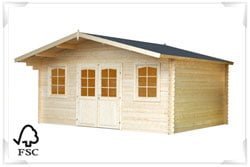 But back to timber. Another factor that lets you buy GardenLife cabins with a clear environmental conscience is that they’re made from sustainable Nordic timber.
Forestry is a huge business in the Nordic and Baltic countries – especially Estonia (home of the Lemeks Group), Finland and Sweden. Since the forests are a major source of revenue and employment, and a strong part of these countries’ culture and history, they enjoy significant legal protection. There are strict rules about how much timber can be harvested, and how much must be replanted.
You can be sure that by buying cabins made from Baltic timber, you’re buying wood carefully sourced from sustainable forests. So when you are browsing the GardenLife website look out for the FSC logo – you can buy an FSC-certified garden building, summerhouse or children’s playset safe in the knowledge that the timber came from sustainably managed forests.